The practical answer
A GA operator can train an apprentice for the aircraft it maintains and plan a CASA licence pathway at the same time. The apprenticeship must still deliver a full qualification. The licence pathway adds the training, exams and experience needed for the certification privileges the employer and engineer have chosen.
What is AMROBA asking for?
In its October 2026 paper, Provision of NVET Qualifications to Support Licences, AMROBA argues that vocational training and aircraft maintenance licensing are not joined up well enough, particularly for general aviation and helicopter operators.
It wants clearer pathways from apprentice to licensed engineer, closer cooperation between ASQA and CASA, and less duplication in provider oversight. It also compares Australia’s licence categories with European options.
Those are system-wide concerns. The paper does not specifically say that an apprentice cannot work towards a modular licence. Its broader argument is that GA and helicopter businesses are not being served by the training system.
GA qualifications and licence streams already exist
One part of the paper needs clarification: its claim that vocational pathways exist only for B1.1 and B2 does not reflect the full range on the national training register.
Certificate IV
The aircraft maintenance stream of MEA40718 Certificate IV in Aeroskills (Mechanical) requires 21 units: eight core and 13 electives. Its choices include piston engines, propellers and rotary-wing systems, subject to the packaging rules and prerequisites.
See the qualification and electivesDiploma
MEA50219 Diploma of Aeroskills (Mechanical) contains elective groups for B1.1, B1.2, B1.3 and B1.4. Its published history specifically records the addition of B1.2 and B1.4 groups in 2019.
See the Diploma’s licence streamsThe qualification does not have to be called “GA” to support GA work. The unit selection, delivery and workplace experience are what make it relevant. That does not mean every provider offers every stream, or that every funding arrangement suits it.
A qualification is also not a licence. CASA sets separate knowledge and experience requirements. The selected units, applicable exams and practical evidence must all match the intended licence scope.
How Sigma makes the pathway work
Our College starts with the employer’s aircraft and the work the engineer needs to do. We choose the appropriate Certificate IV stream and electives, then map any Diploma units, additional competencies and CASA exams required for the intended outcome.
For avionics, we map the relevant qualification and B2 requirements. We recognise valid existing credit, identify missing task exposure and agree how it will be obtained. The apprentice gets a training plan, and the employer can see what they need to support.
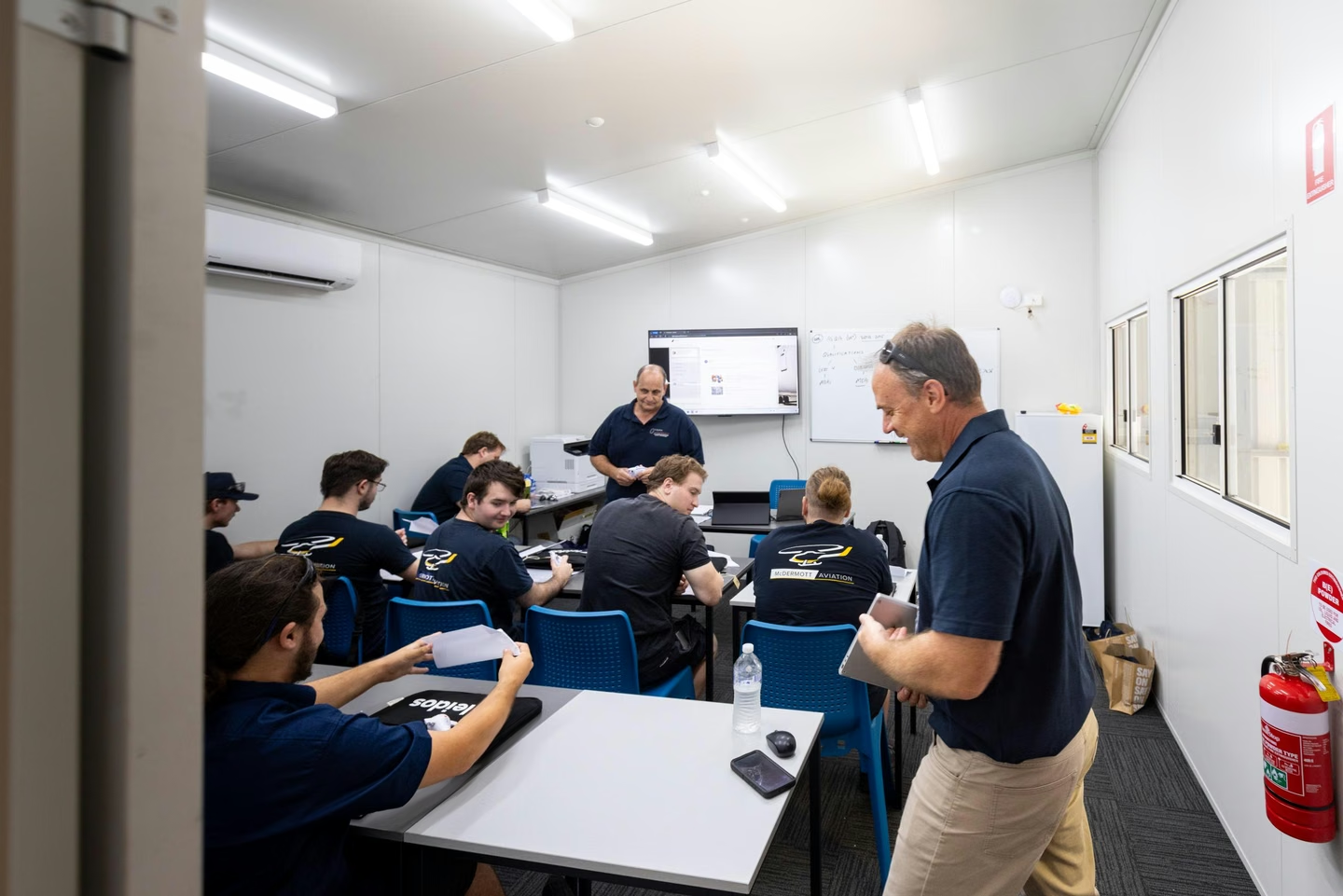
Training is delivered through supported workplace learning, regular trainer contact and planned visits, without mandatory recurring block release. Apprentices still need paid learning time, suitable work and qualified supervision. Our employer training guide explains the delivery model.
This addresses the practical training problem for an operator today. It does not change the national training package or replace either regulator’s requirements.
A full apprenticeship. A focused licence outcome.
A modular licence training package may cover only part of a qualification. That package alone is not a substitute for the qualification named in an apprenticeship training contract.
The workable combination is a full Certificate IV apprenticeship, with a separately mapped modular licensing component alongside it. Sigma can build that combined fee-for-service plan with the employer. The formal apprenticeship and training contract remain subject to the relevant state or territory arrangements.
The apprentice completes every required Certificate IV unit, including units beyond the narrower licence scope. We add the licensing competencies and examinations the chosen scope requires, and plan the necessary experience. Shared competencies are recognised where they meet both requirements; they are not treated as two unrelated courses.
One coordinated training plan
Choose the licence outcome.
Keep the full trade qualification.
Existing credit · qualification requirements · licence scope · access to tasks
Complete the Certificate IV
All core and elective requirements, selected for the aircraft maintenance work.
aircraft maintenance stream
Include any qualification units that sit outside the selected modular scope.
Add the selected licence scope
- Additional units and practical assessment
- Applicable Part 66 knowledge and exams
- Required experience, records and application
Example: a piston-aeroplane operator could plan an initial B1.2 airframe scope, then add powerplant and other scope later. CASA also permits other starting scopes; airframe first is not compulsory.
Certificate IV and Diploma
Map the trade qualification and the Diploma stream for the intended category, with valid credit carried forward.
Complete all packaging requirements for each qualification being awarded.
Complete the category scope
- Category-aligned units and any additional requirements
- Required Part 66 exams
- Required experience, records and application
A full category plan covers a broader scope. The qualification, apprenticeship and licence are still separate outcomes.
Plan together. Assess each requirement. The lanes show the requirements, not a fixed order or completion time. CASA decides licence issue.
A modular outcome does not automatically award a Diploma or complete an apprenticeship. Equally, completing the Certificate IV does not grant certification privileges. The apprenticeship contract identifies the qualification; CASA’s modular pathways define how licence scope can develop.
This matters in a small operation. The employer can develop the trade skills it needs while supporting a specific first licensing goal. If the engineer later needs broader privileges, we can map the remaining training and experience. Read more about modular licences.
How the combined price is calculated
Start with the Certificate IV stream that best fits the employer’s aircraft and work. Add only the units missing for the selected modular licence, then the exams required for that modular stream.
Three parts to the package
Certificate IV + extra units + exams.
- $5,200Published base fee
The right Certificate IV stream
Choose the qualification stream and electives most relevant to the work and intended licence.
- Mapped unitsPriced in your quote
Any missing licence units
Price only the additional units needed for that modular scope. Units already covered by the Certificate IV or recognised credit are not charged again.
- Required examsPriced in your quote
The modular stream’s exams
Add the cost of the exams required for the selected modular licence stream.
Added separately for each active quarter of training.
For example: for a piston-aeroplane apprentice working towards a B1.2 airframe scope, we select the relevant mechanical Certificate IV electives. We then identify any missing licence units and add the required exam costs. Your quote lists these three parts, plus quarterly support.
This fee-for-service workplace arrangement has no separate application fee. Resits, repeated reassessment, CASA charges and optional extras are additional. Wages and employer supervision are outside the training fees.
See the published workplace training fees and inclusions. Queensland funding and eligibility are considered separately.
What the operator needs to bring
Tell us the aircraft you maintain, the tasks available, who will supervise the apprentice and the licence privileges you want them to work towards. We will check the training resources and records, identify any gaps in workplace exposure and build the plan with you.
There is no need for the employer to work out every MEA unit or CASA requirement first. That is part of the College’s job. We train and assess the competencies, prepare learners for the relevant exams and help keep the qualification and licence requirements clear.
ASQA requires the full training product to be met even where licensing requirements differ. Our response is to map both properly, rather than treat an exam result, a qualification and a licence as the same thing.
Build the capability your operation needs
Your aircraft. Your apprentice.
A plan for both outcomes.
Ask Sigma Aerospace College to map a Certificate IV apprenticeship with the full or modular licence pathway that suits your business.
Discuss a GA training planThis article responds to AMROBA’s paper dated 18 October 2026. AMROBA is an independent industry association; this article does not imply its endorsement of Sigma. Source links and fee references checked 31 October 2026.